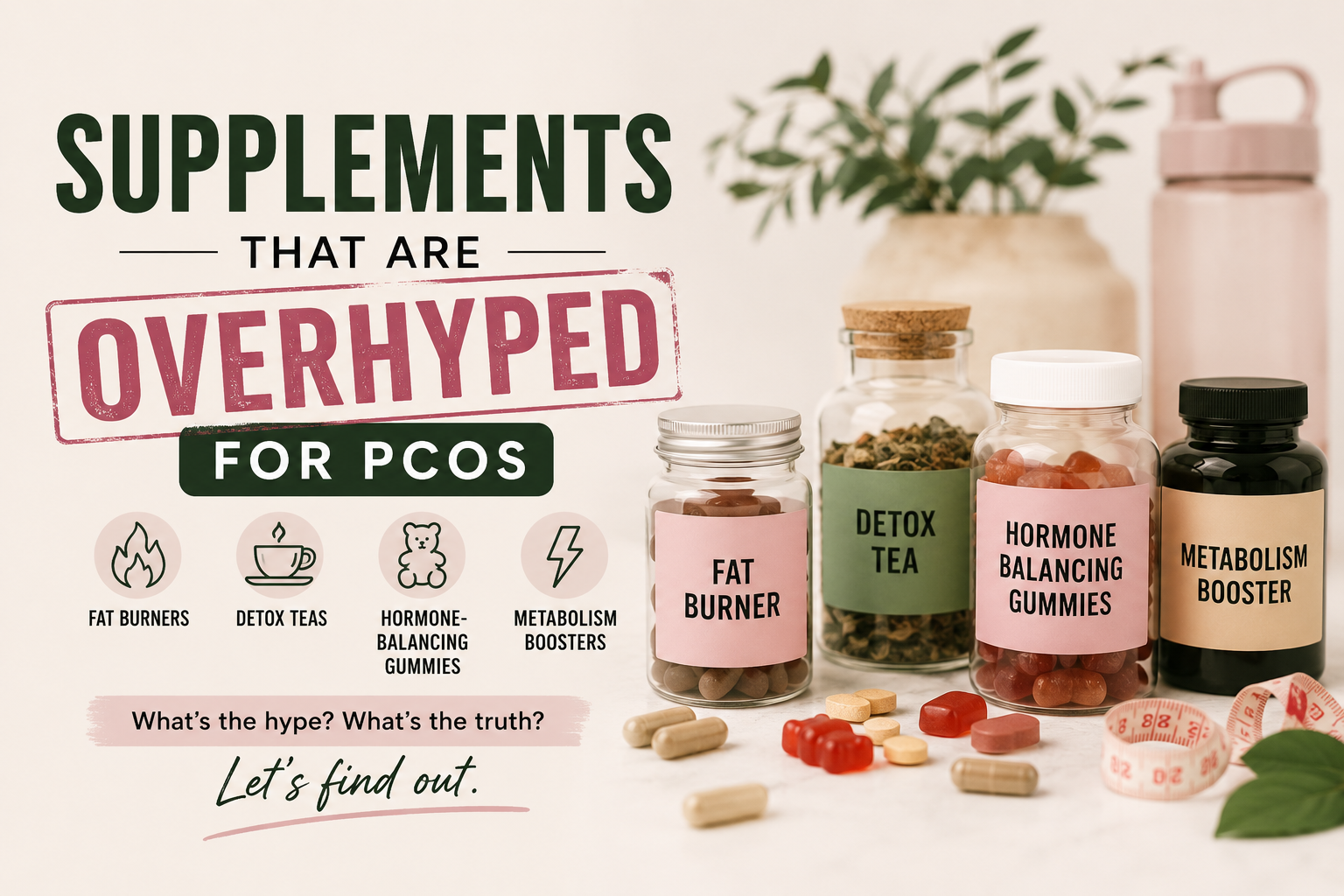
Walk into any supplement store or spend five minutes scrolling social media, and you’ll be bombarded with products claiming to “balance hormones,” “boost metabolism,” “burn fat,” or “detox your body.”
For a woman with PCOS, these promises can be especially tempting. PCOS is a complex hormonal and metabolic condition that can affect weight, energy levels, fertility, skin health, and insulin sensitivity. When you’re struggling with symptoms, it’s natural to look for a quick solution.You are not alone, I too have fallen for these quick fixes at some point.
Unfortunately, many of the most heavily marketed supplements offer far less than they promise.
Let’s separate fact from fiction.
The Problem with the Supplement Industry
The supplement industry is worth billions of dollars annually, and marketing often moves much faster than science. Many products are sold using vague terms like:
- Hormone balancing
- Metabolism boosting
- Fat burning
- Detoxifying
- Women’s wellness support
The problem? These phrases sound scientific but are rarely defined.
Which hormone is being balanced?
How much is metabolism being boosted?
What exactly is being detoxified?
Without clear answers backed by clinical evidence, these claims should be viewed with skepticism.
Overhyped Supplement #1: Fat Burners
Fat burners are among the most popular supplements marketed toward women trying to lose weight.
Most contain combinations of:
- Caffeine
- Green tea extract
- Bitter orange
- Guarana
- Various stimulant blends
While some ingredients may slightly increase energy expenditure, the actual effect on long-term fat loss is usually small.
Many people mistake increased energy, sweating, or appetite suppression for meaningful fat loss. In reality, most fat burners do not address the underlying drivers of PCOS-related weight gain, such as insulin resistance, sleep quality, stress, and hormonal dysfunction.
Even more concerning, regulatory agencies continue to find products containing undisclosed pharmaceutical ingredients or potentially dangerous compounds.
The Reality
A fat burner cannot compensate for poor sleep, unmanaged insulin resistance, inadequate protein intake, or a lack of resistance training.
If a supplement’s primary effect is making your heart race, it’s probably not solving the root problem.
Overhyped Supplement #2: Detox Teas
Detox teas have become a staple of social media wellness culture.
They’re often marketed as a way to:
- Remove toxins
- Reduce bloating
- Flatten the stomach
- Cleanse the body
- Accelerate weight loss
The reality is much less exciting.
Many detox teas rely on herbal laxatives or diuretics. This can temporarily reduce body weight by increasing bowel movements or causing water loss.
However, losing water weight is not the same as losing body fat.
Your body already possesses an advanced detoxification system:
- Liver
- Kidneys
- Digestive tract
- Lungs
- Skin
These organs work continuously to process and eliminate waste products.
There is little evidence that detox teas improve this process in healthy individuals.
The Reality
If tea causes frequent trips to the bathroom, that’s not proof it’s detoxifying you.
It’s usually proof that it’s acting as a laxative.
Overhyped Supplement #3: Hormone-Balancing Gummies
This category may be one of the most misleading in the women’s health space.
Many products claim to “balance hormones” without explaining:
- Which hormones
- By what mechanism
- Supported by what evidence
Hormones include:
- Insulin
- Estrogen
- Progesterone
- Testosterone
- Cortisol
- Thyroid hormones
- LH and FSH
- Prolactin
These hormones perform completely different functions throughout the body.
Claiming a gummy can “balance hormones” without specifying which hormones are affected is similar to saying a car repair shop “fixes engines” without explaining what’s broken.
The Reality
Hormonal health should be measured through symptoms, laboratory testing, and clinical outcomes—not marketing slogans.
Some supplements do show promise for specific PCOS-related concerns, but that is very different from a blanket promise to “balance hormones.”
Overhyped Supplement #4: Metabolism Boosters
Another common claim is that a supplement can “speed up metabolism.”
Most metabolism boosters contain:
- Caffeine
- Green tea extract
- B vitamins
- Stimulant herbs
While certain nutrients support normal metabolic function, supporting metabolism is not the same as dramatically increasing calorie expenditure.
Many people assume feeling energized means their metabolism is faster.
In reality, metabolism is influenced by factors such as:
- Muscle mass
- Activity levels
- Sleep quality
- Thyroid function
- Body size
- Age
- Hormonal status
No capsule can override these fundamentals.
The Reality
A true metabolic improvement often comes from improving insulin sensitivity, increasing lean muscle mass, optimizing thyroid function, and supporting overall health—not simply taking another stimulant.
What Women with PCOS Should Focus On Instead
Rather than chasing trendy supplements, focus on interventions with stronger evidence behind them.
Nutrition
A diet rich in:
- Protein
- Fiber
- Whole foods
- Healthy fats
can improve satiety, blood sugar control, and overall metabolic health.
Strength Training
Building muscle improves:
- Insulin sensitivity
- Glucose utilization
- Resting metabolic rate
- Body composition
Sleep
Poor sleep can worsen:
- Insulin resistance
- Hunger signals
- Cortisol regulation
- Weight management
Bloodwork
Understanding your individual physiology is critical.
Important markers may include:
- Fasting glucose
- Fasting insulin
- HbA1c
- Lipid profile
- Thyroid function
- Vitamin D
- Testosterone
- SHBG
Evidence-Based Supplements
Depending on individual needs, some supplements may have stronger evidence than the products discussed above.
These can include:
- Myo-inositol
- Vitamin D (if deficient)
- Omega-3 fatty acids
- Magnesium
- NAC
- Berberine (with appropriate guidance)
These are not magic solutions, but they generally have more scientific support than detox teas, fat burners, or generic hormone-balancing gummies.
The Bottom Line
PCOS is not caused by a deficiency of detox tea.
It is not cured by fat burners.
And it is not fixed by vague promises to “balance hormones.”
The most effective approach to PCOS focuses on understanding the underlying drivers of symptoms, improving metabolic health, and using evidence-based strategies consistently over time.
Before purchasing any supplement, ask yourself:
What specific outcome is this supposed to improve?
What evidence supports that claim?
And is there a measurable marker that shows it’s actually working?
The answers to those questions will tell you far more than the label ever will.
Leave a Reply