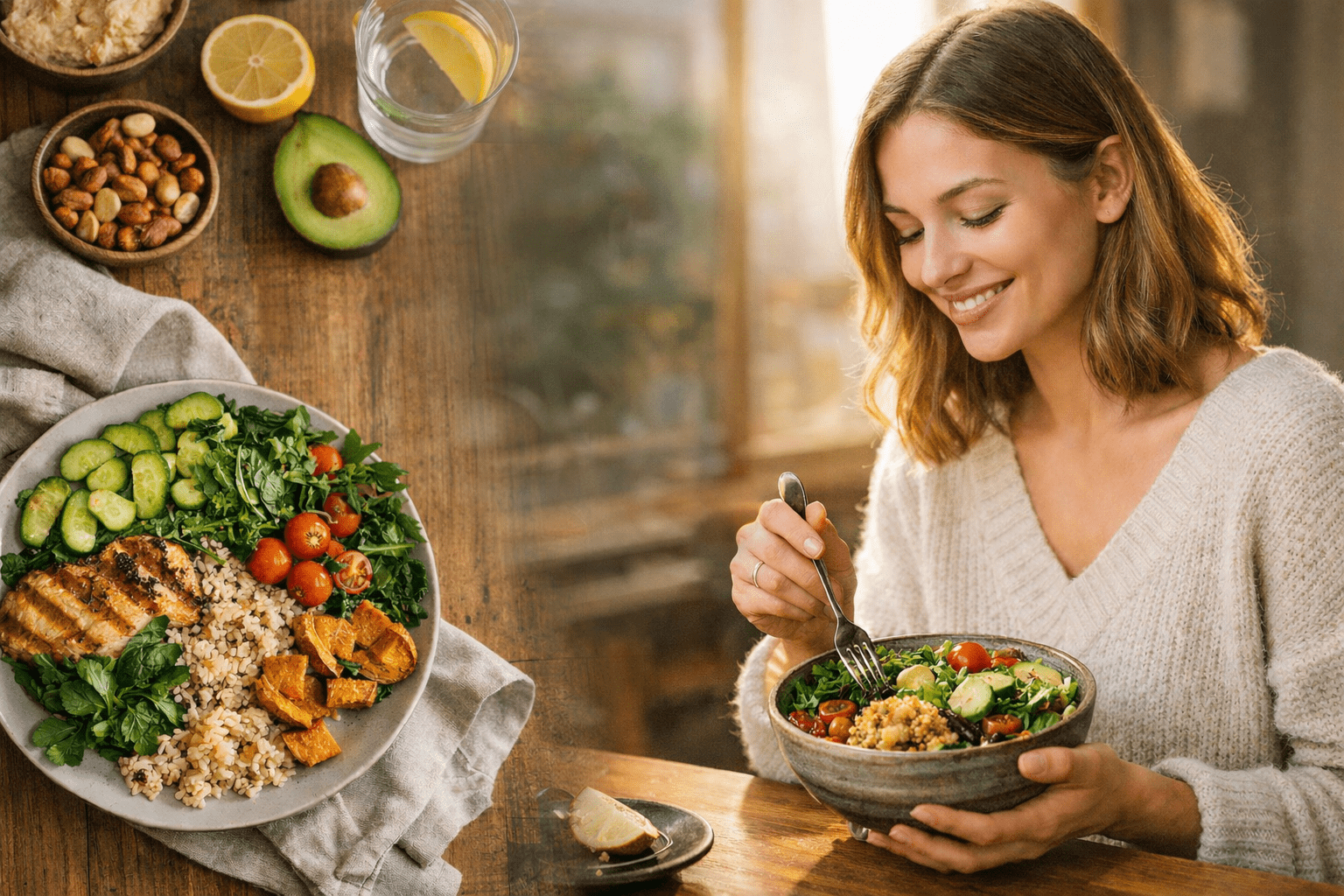
Healthy eating should support your body, not punish it. Let’s talk about how to build a balanced relationship with food, improve hormonal health, and create sustainable eating habits.
If you’ve ever started a new diet on Monday after feeling guilty about what you ate over the weekend, you’re not alone. Many of us were taught that healthy eating means cutting out everything we enjoy—no sugar, no carbs, no comfort food, and definitely no “cheat meals.”
For a while, it might feel like discipline. But after a few weeks, it starts to feel exhausting. Meals become bland, cravings get stronger, and suddenly eating healthy feels less like self-care and more like punishment.
But here’s the truth: healthy eating was never meant to feel restrictive or miserable. In fact, when it does, it usually means something about the approach is unsustainable.
Building a healthy lifestyle isn’t about forcing yourself to eat foods you hate or constantly fighting cravings. It’s about creating a balanced relationship with food that supports your body, energy, and long-term wellbeing.
The Problem With the “Diet Punishment” Mindset
For decades, diet culture has framed food as something we need to control or restrict. Certain foods are labeled “good,” others are labeled “bad,” and eating the wrong thing is often followed by guilt.
This mindset creates a cycle that looks something like this:
- Start a strict diet.
- Remove favorite foods.
- Feel deprived and constantly crave them.
- Eventually give in.
- Feel guilty and start over again.
Instead of helping people build healthier habits, this cycle damages their relationship with food.
It also creates the belief that healthy eating requires constant sacrifice. Over time, food becomes a source of stress instead of nourishment.
What Happens When Healthy Eating Feels Like Punishment
When eating healthy feels restrictive or miserable, it usually leads to the opposite of what we want.
1. Constant Cravings
The more foods you forbid, the more your brain fixates on them. Restriction often intensifies cravings rather than eliminating them.
2. Binge–Restrict Cycles
Many people swing between extremely strict eating and overeating. This pattern can make it very difficult to maintain a balanced diet long term.
3. Mental Exhaustion Around Food
When every meal requires strict rules or calculations, food stops being enjoyable. It becomes something you constantly worry about.
4. Hormonal and Energy Imbalances
Extreme restriction can disrupt metabolism, reduce energy levels, and even worsen conditions such as Polycystic Ovary Syndrome, where stable blood sugar and balanced nutrition are essential for hormonal health.
What Healthy Eating Should Actually Feel Like
Healthy eating should support your life—not take it over.
When your eating habits are balanced and sustainable, food should feel like:
Nourishment
Meals give you steady energy instead of constant highs and crashes.
Satisfaction
Food tastes good and leaves you feeling full and content.
Flexibility
You can enjoy a variety of foods without guilt.
Care for your body
Your meals support digestion, hormones, and overall well-being.
Instead of focusing on perfection, healthy eating should focus on consistency and balance.
Signs Your Current Diet Might Be Too Restrictive
Sometimes it’s not obvious when a diet has become unhealthy. Here are a few signs that your approach to healthy eating might feel more like punishment than nourishment:
- You feel guilty after eating certain foods
- You constantly think about food or cravings
- Meals feel repetitive or boring
- You avoid social events because of food rules
- You feel anxious when eating something outside your “diet.”
- You never feel satisfied after a meal
If any of these feel familiar, it may be time to rethink your approach.
How to Build a Healthier Relationship With Food
Creating a sustainable way of eating doesn’t require extreme rules. Small mindset shifts can make a huge difference.
Stop Labeling Foods as “Good” or “Bad”
Food is not a moral decision. Some foods are more nutrient-dense than others, but enjoying occasional treats is part of a balanced lifestyle. Removing strict labels helps reduce guilt and prevents binge cycles.
Focus on Adding Nourishment
Instead of asking “What should I remove from my diet?” try asking:
- How can I add more fiber?
- Can I include more vegetables?
- How can I balance this meal with protein and healthy fats?
Adding nutrients naturally improves the overall quality of your meals.
Make Meals Enjoyable
Healthy food should still taste good. Spices, herbs, sauces, and cooking techniques can transform simple ingredients into satisfying meals. When meals are enjoyable, healthy eating becomes easier to maintain.
Listen to Your Body
Your body constantly gives signals about hunger, fullness, and energy levels. Learning to recognize these cues helps create a more intuitive approach to eating instead of following rigid rules.
A Realistic Example of Balanced Eating
Healthy eating doesn’t require complicated meal plans or perfect meals.
A balanced day might look like this:
Breakfast: Greek yogurt with fruit and nuts
Lunch: Rice or quinoa bowl with vegetables and protein
Snack: fruit, nuts, or a smoothie
Dinner: A comforting homemade meal with vegetables, grains, lentils and protein
This kind of approach focuses on balanced nutrition and satisfaction, rather than restriction.
Why Sustainable Healthy Eating Matters
Extreme diets may promise quick results, but they rarely last. Long-term health is built through habits that feel realistic and enjoyable.
When food stops feeling like punishment, healthy choices become much easier to maintain. And you start to enjoy it and it slowly becomes your new normal.
Instead of chasing perfection, focus on creating habits that support:
- stable energy
- balanced hormones
- improved digestion
- a healthier relationship with food
The goal isn’t to control food—it’s to use food to care for your body.
All I am saying is……..
Healthy eating should never feel like punishment. It should feel like a form of self-respect and nourishment. It should become a part of your Self-care routine.
Food is not something you need to constantly fight or control. It’s one of the most powerful ways to support your health, energy, and wellbeing.
When you move away from restriction and toward balance, something surprising happens: healthy habits stop feeling like rules and start feeling like a natural part of life.
And that’s when real, sustainable health begins.
Leave a Reply