When Your Body Feels Like It’s Speaking a Language You Don’t Understand: Signs of Hormonal Imbalance, PCOS Symptoms, and Body Signals You Shouldn’t Ignore
Have you ever felt like something in your body just isn’t right, but you can’t quite explain why?
Maybe your periods have become unpredictable. Maybe the scale started creeping up even though your habits hadn’t changed. Or you noticed persistent acne. Maybe you experienced fatigue that never seemed to go away. You have found that emotions suddenly feel harder to manage.
For many women, these experiences feel confusing and isolating. It’s easy to dismiss them as stress, genetics, or just “one of those things.”
But sometimes, these signals point to something deeper.
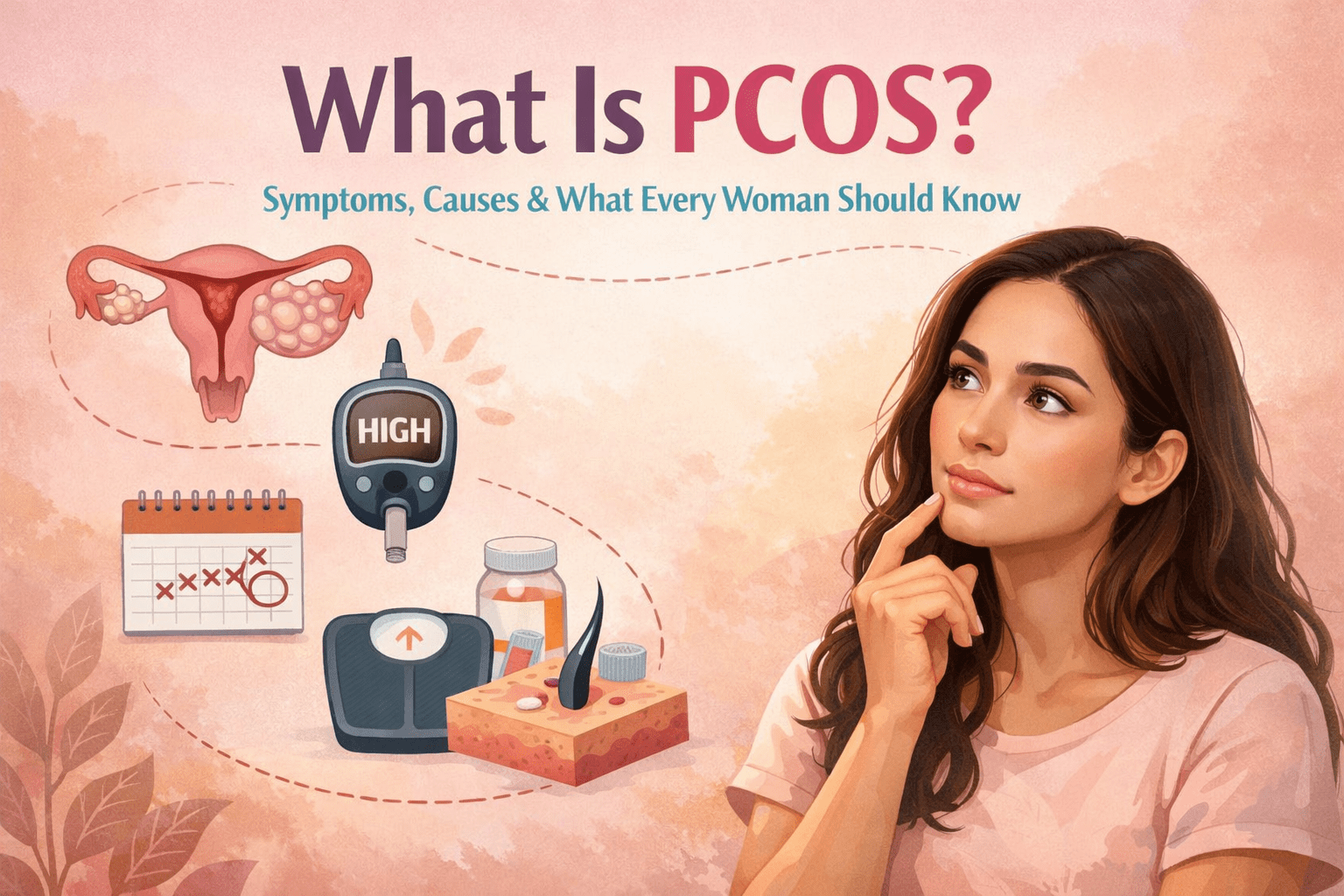
One condition that affects millions of women but is still widely misunderstood is Polycystic Ovary Syndrome, also known as PCOS.
You have heard the term before. You even suspect you have it. But understanding what PCOS actually is—and what it means for your body—can feel overwhelming.
The good news is that it doesn’t have to be complicated. Let’s break it down simply and honestly.
So, What Exactly Is PCOS?
At its core, Polycystic Ovary Syndrome is a hormonal condition that affects how a woman’s ovaries work.
Your ovaries play a crucial role in regulating hormones and releasing eggs during your menstrual cycle. When hormones are balanced, this process happens naturally and consistently.
Yet, with PCOS, the hormonal system becomes disrupted, which leads to 3 main conditions:
Hormones Becoming Imbalanced
Women with PCOS often produce higher levels of androgen, also known as “male hormones.” All women naturally have small amounts of these hormones. But elevated levels can interfere with ovulation. They cause symptoms like acne or excess hair growth.
Ovulation Becoming Irregular
Because hormone signals become disrupted, the ovaries do not release eggs regularly. This occurs when the dominant follicle fails to mature. It does not release the egg. Instead, multiple immature follicles cluster in the ovaries. This is why many women with PCOS experience irregular or missed periods.
Small Follicles Appearing on the Ovaries
Some women with PCOS develop small fluid-filled sacs on their ovaries. These are actually follicles that didn’t mature properly.
Despite the name, not every woman with PCOS has ovarian cysts. This is why the condition can sometimes be confusing to diagnose.
The Signs Many Women Notice First
One of the most challenging things about PCOS is that it doesn’t look the same for everyone. Some women notice symptoms in their teenage years, while others only start to recognize them later in adulthood.
Common signs include:
- Irregular or missed menstrual cycles
- Unexplained weight gain or difficulty losing weight
- Stubborn acne or oily skin
- Excess hair growth on the face, chest, or chin
- Hair thinning on the scalp
- Feeling constantly tired or low on energy
- Mood swings or increased anxiety
Some women experience only a few of these symptoms, while others experience several. This variation is one reason why many women spend years searching for answers before finally receiving a diagnosis.
Why Does PCOS Happen?
Despite all the studies conducted on the topic, researchers are still studying the exact cause of PCOS. Several key factors play a role.
Hormones That Fall Out of Balance
Hormonal communication in the body is incredibly delicate. When certain hormones increase or decrease too much, the balance shifts and affects ovulation, metabolism, and energy levels. Hormonal imbalance can occur due to several factors, such as lifestyle changes, stress, weight fluctuations, and eating habits.
How we function in our day-to-day life has a major impact on our overall health and hormonal functionality.
Insulin Resistance
Many women with PCOS also experience insulin resistance. This means the body has difficulty using insulin efficiently.
When this happens, the body produces more insulin than necessary, which can trigger the ovaries to produce more androgens. This creates a cycle that worsens hormonal imbalance and can make weight management more difficult. And it also increases the risks of type 2 diabetes and heart health issues.
Genetics
If someone in your family has PCOS, your chances of developing it may be higher. While genetics doesn’t guarantee it will happen, they can increase susceptibility. It simply means that even if you are born with PCOS genes, they are often triggered by environmental factors.
How Doctors Diagnose PCOS
Getting diagnosed with Polycystic Ovary Syndrome usually involves examining multiple pieces of information. It is not possible to rely on just one test. There is no single test that can reliably diagnose a condition that affects each individual differently.
Doctors may evaluate:
- Your menstrual cycle patterns
- Symptoms such as acne or excess hair growth
- Blood tests that measure hormone levels
- A Pelvic ultrasound to examine the ovaries
Many healthcare providers use something called the Rotterdam criteria, which means that at least two of the following must be present:
- Irregular ovulation or periods
- Elevated androgen levels
- Polycystic ovaries are visible on ultrasound
Can PCOS Be Treated?
At the moment, PCOS doesn’t have a permanent cure. However, that doesn’t mean women are powerless against it. Symptoms can often be managed effectively through a combination of medical care and lifestyle adjustments.
Depending on individual needs, treatment may include:
- Hormonal medications to regulate menstrual cycles
- Medications that improve insulin sensitivity
- Fertility treatments for women trying to conceive
- Nutrition and lifestyle changes that support hormone balance
For many women, small changes in daily habits can have a surprisingly powerful impact. Since every PCOS story is unique, your journey will also be unique. You need to listen to what your body needs and what it responds to best.
Lifestyle Changes That Can Help
Although everybody is different, many women find relief by focusing on habits that support hormonal health.
Some helpful approaches include:
Balancing blood sugar
Eat meals that include protein, fiber, and healthy fats. This may help stabilize energy levels. It can also reduce insulin spikes.
Choosing anti-inflammatory foods
Whole foods such as vegetables, fruits, nuts, seeds, and whole grains support overall metabolic health.
Moving the body regularly
Exercise improves insulin sensitivity and helps regulate hormones.
Managing stress
Chronic stress can affect hormonal balance. Activities like yoga, journeying, meditation, or even simple walks can help calm the nervous system.
Prioritizing sleep
Quality sleep plays a major role in regulating hormones that influence appetite, metabolism, and mood.
Small changes done consistently tend to work better than extreme lifestyle overhauls. Your body needs healing; it needs a reset, and healing takes time and consistency.
If You’re Living With PCOS
If you’ve recently discovered that you have PCOS—or suspect that you might—it’s natural to feel overwhelmed. First, take a deep breath. Remember something many women don’t hear often enough: You are not alone.
Millions of women around the world are navigating the same journey. They are learning how their bodies work. They are also discovering ways to support their health.
PCOS does not define your worth, your femininity, or your future.
Understanding your body is one of the most empowering things you can do.
Polycystic Ovary Syndrome is one of the most common hormonal conditions affecting women today, yet awareness is still growing.
The most important things to remember are simple:
Learning about your body is the first step toward taking care of it. It is always good to listen to advice and educate yourself on the topic. Remember, your body is different. Your story is different. Therefore, your journey will also be different. You need to listen to your body and navigate accordingly.
Leave a Reply